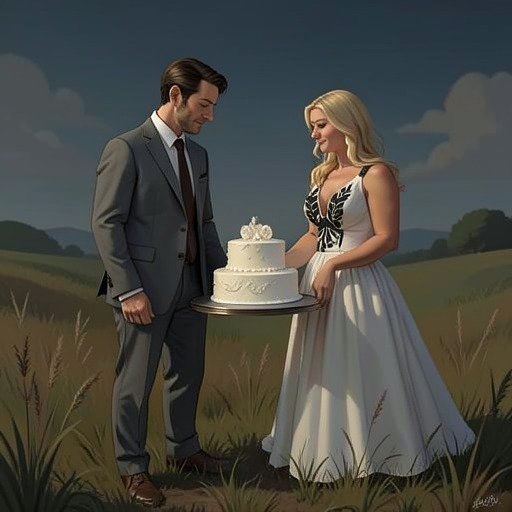
Joban's Wedding Is Called Off
The Box ManJoban's Wedding Is Called Off is a comic, bodily humiliation that turns a costly wedding custom into a failed arrival and sends groom and father away from the town together. The groom’s accidental exposure before his bride is the immediate rupture, but the episode makes the failure inseparable from poverty, an improvised carriage, and the father’s determined effort to uphold tradition in a cardboard box. In the dreamlike telling, the wedding does not lead to a new household: it ends with departure, a piano, and portraits made from memory.
Causes and Background
The groom recounts a journey toward a house at the top of a slope near the city’s exit. Having traveled a long way in what he calls a horse-drawn carriage, he reaches the city gate and doubts his own sense of direction: the distance traveled suggests that the destination may actually be at the town’s entrance. The uncertain geography suits a journey whose effort and purpose are already coming apart.
There is no horse. The conveyance is a baggage cart drawn by the groom’s father, who is over sixty and has hidden himself beneath a cardboard box. He has taken the place of the horse because village custom requires a bride to be met in a horse-drawn carriage. The box conceals him from the groom’s embarrassment and, he hopes, spares the bride a shock. The family cannot afford to hire a real carriage, and the groom considers abandoning the wedding over the fee too great a sacrifice. His father’s absurd substitution is therefore both an act of care and a visible measure of their limited means.
The journey is slow and punishing. The father struggles up a rough, sloping road, moving at a fraction of a horse’s pace, while the cart jolts and time seems to race ahead of them. The groom’s bodily need becomes impossible to defer. When the cart stops, his father loosens a strap around the box’s belly and looks up through the small front observation window with an exhausted smile. The groom climbs down from what he has been calling a carriage, though it is really a baggage cart, and hurries to the roadside to urinate.
The Encounter at the Roadside
The groom believes a great thicket of palms between the road and the bride’s house screens him from view. The bride, however, has grown tired of waiting and come out to welcome him, apparently having heard the cart from a distance. She too is concealed behind the palms, so the two meet each other’s gaze from opposite sides of what each thought was a shield. She sees him exposed. Her white garment flickers among the branches; then her quick steps and a door slammed behind her make the rejection legible without any explanation from her.
The episode stretches the instant of discovery into a sudden reversal. The groom has been on the verge of reaching the hoped-for marriage, but the sight he meant to keep private becomes the scene that destroys that hope. His urine continues to flow as he cries, and it makes a steaming yellow pool in the earth. That grotesquely physical detail refuses to separate emotional collapse from bodily exposure: humiliation is not an abstraction but something occurring in public, beyond his control.
His first response is to beg his father to act as the bride’s guardian and repair the situation. The request cannot undo what she has seen. The father instead advises him to give up, reasoning that a young woman will regard the exposure as evidence of a mania, whether or not the groom believes that judgment is fair. The groom denies having such a compulsion and argues that the impending marriage should make the incident matter less. His father’s answer is practical rather than consoling: the bride has seen him, and the wedding has become untenable.
Departure and Aftermath
The father asks his son to bear the disgrace without further struggle, pointing to the extraordinary lengths he has gone to in order to serve as the horse. He is also anxious to keep the episode out of the groom’s future biography, where even hundreds of volumes about the life of Chopin should not preserve the scandal. The name and the imagined biography enlarge the mismatch between the scene’s undignified particulars and the groom’s sense that his life might become worthy of a formal account.
The father assigns part of the blame away from the groom: he invokes social prejudice about indecent exposure and the municipal failure to provide public toilets. His solution is to leave for a large city, where public conveniences might allow them to urinate and defecate without such danger. The groom knows that changing cities cannot heal the injury, yet accepts that the town has become impossible to inhabit. His defenselessness while exposed has made him feel unsafe there, and he recognizes that he has no attachment strong enough to keep him in it.
They abandon the cart, but the father refuses to remove the box. Since he considers himself partly responsible for their predicament, he insists on continuing to play the horse. The groom climbs astride the box with his back to the town where he has lived for so long. The reversal is quietly decisive: the son who had been carried toward a wedding now rides away on the father’s burden, and the father’s protective disguise remains in place even after the original journey has failed.
The Wedding’s Remaining Image
In the city, father and son take a garret room with a piano and try to put their time to use. The groom has the impression that they have entered the bride’s house from the back, though he cannot be sure; the uncertainty leaves the lost home hovering in the aftermath rather than restoring it. To divert himself from grief, he uses the piano as a desk and draws the bride from memory. With practice, the portraits become images of a nude woman, turning the encounter that ended the wedding into the material of a private, repeated act of looking.
The father recognizes his son’s talent but warns him to conserve paper and make smaller pictures because their finances remain poor. That closing practical correction echoes the poverty that required the father to become the horse in the first place. The wedding fails, but their dependence on each other continues: the father has carried his son out of town, and in the new room he remains both companion and critic. The episode’s dreamlike comic logic makes the failed courtship less a clean separation than a transformation of its objects and roles—the carriage becomes a baggage cart, the father becomes the horse, and the absent bride persists as a drawn image.